NEWS
Empowering and amplifying First Nations voices
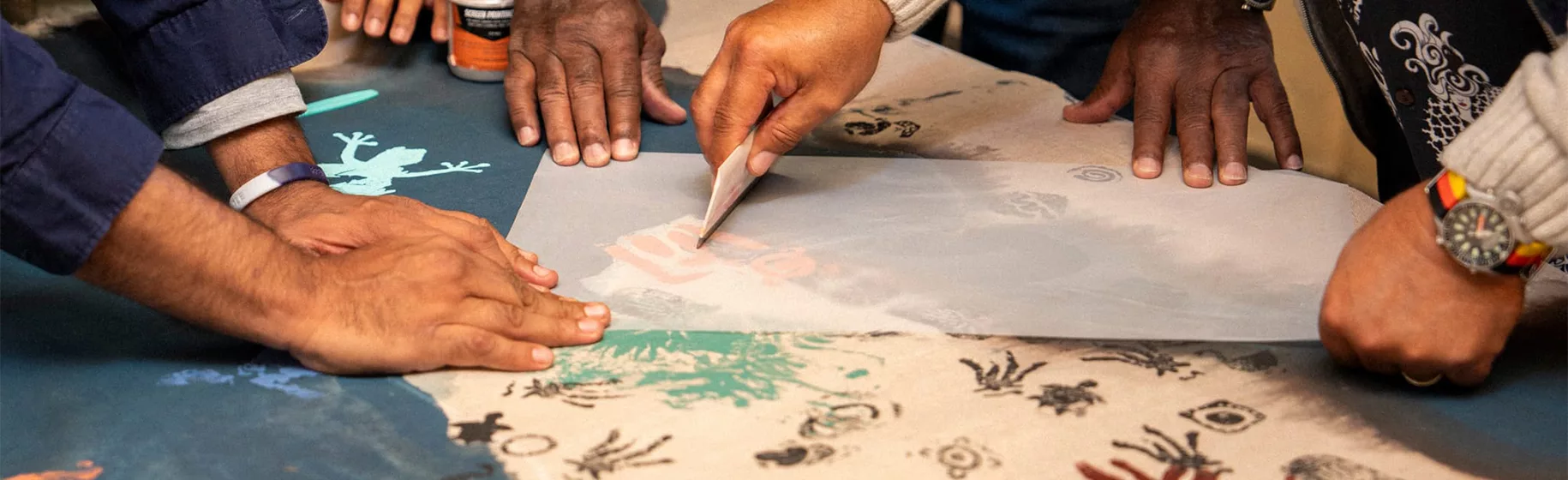
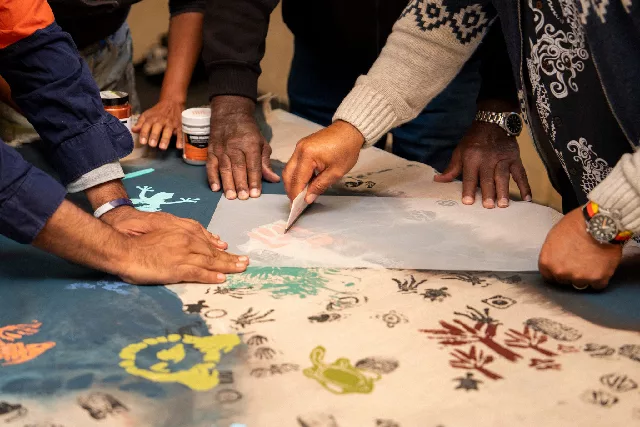
To my Elders, whom I have been so lucky to be able to get to know over this journey, thank you for your wisdom, your knowledge, your information and your stories, which I will take away from this to make me a better man, a proud Whadjuk, Ballardong, Yued Man.
- Ben Ugle, Place Names Melville contributing artist
With a focus on centring and celebrating Noongar language and knowledge, our Place Names projects are grounded in uncovering the ancient stories of this land and sharing them, reaffirming the importance of this knowledge and recognising Noongar traditional owners as the custodians of this land.
Central to this process are the project’s phases: first decoding the ancient meanings of Noongar placenames, then creating collaborative community artworks inspired by those names.
But the power of this project extends beyond its process, and this is what we’re seeing as we prepare for the exhibition that will be the culmination of Place Names Melville, a project produced by CAN in collaboration with Moodjar and the City of Melville.
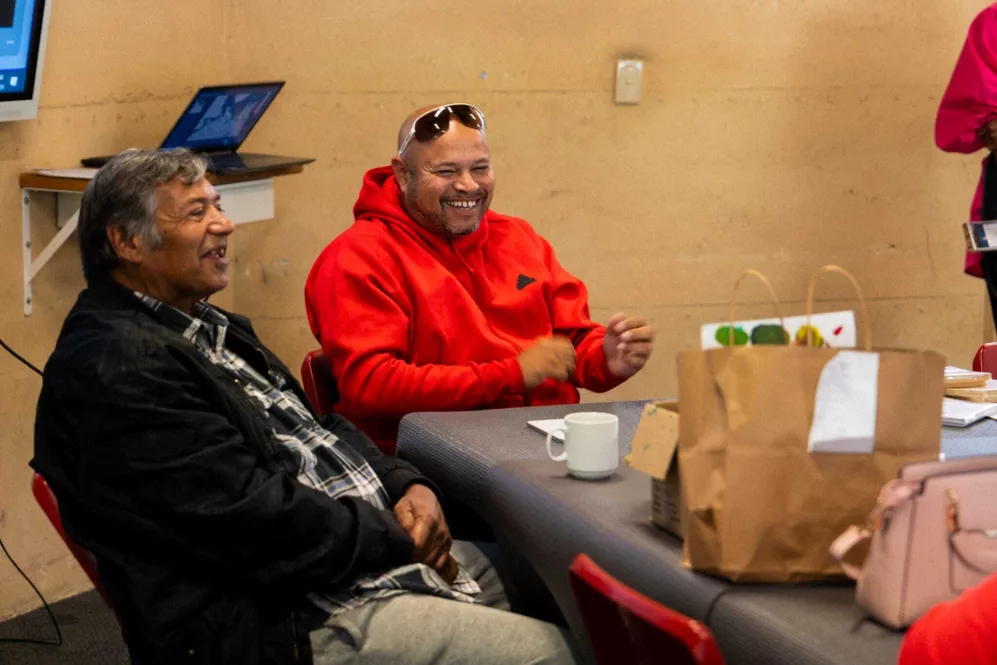 (L–R) Trevor Walley and Joseph Collard
Matty Loucas
(L–R) Trevor Walley and Joseph Collard
Matty Loucas
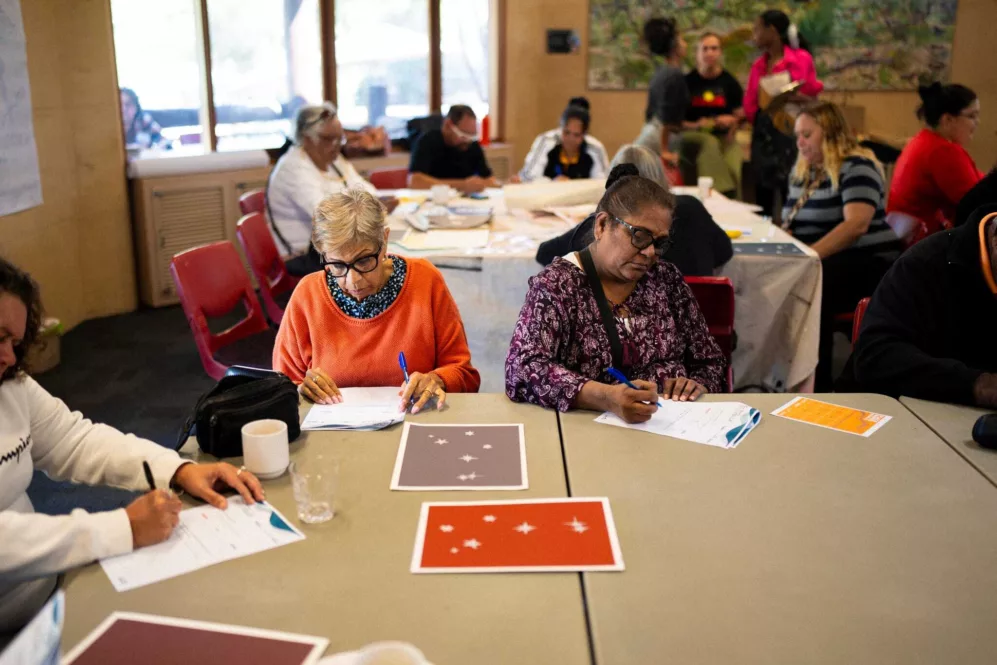 (L–R) Narelle Ogilvie, Geraldine Metcalf and Melba Bodney
Matty Loucas
(L–R) Narelle Ogilvie, Geraldine Metcalf and Melba Bodney
Matty Loucas
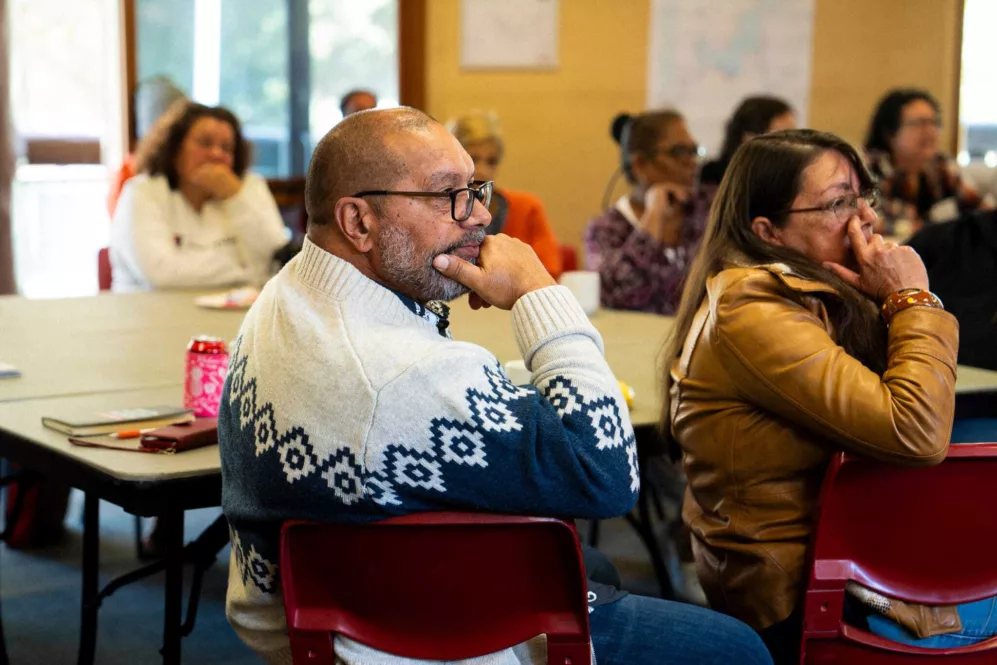 (L–R) Terry Morich and Karen Morich
Matty Loucas
(L–R) Terry Morich and Karen Morich
Matty Loucas
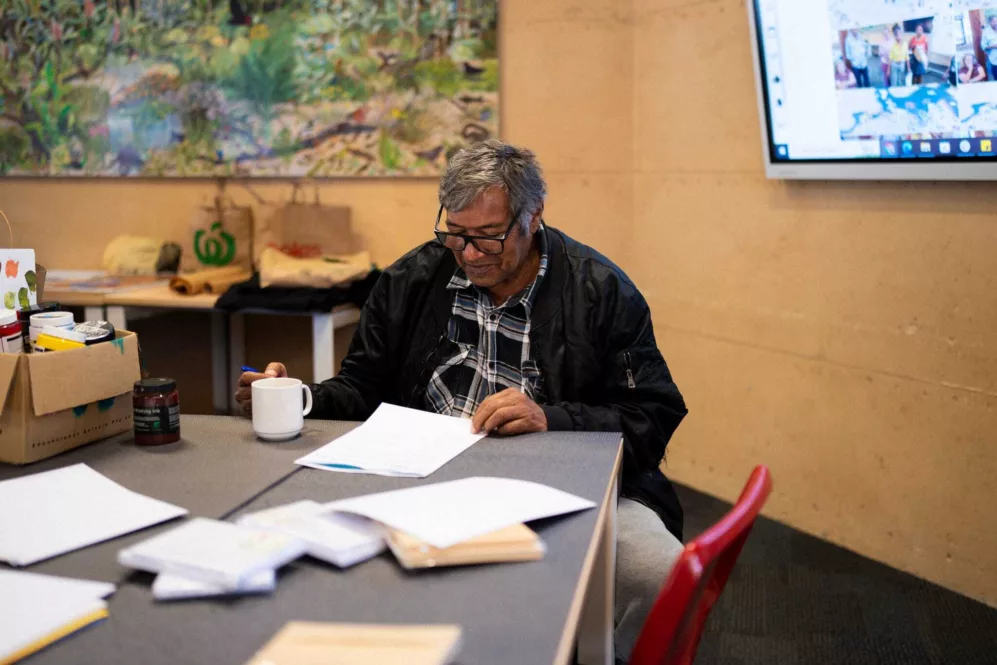 Trevor Walley
Matty Loucas
Trevor Walley
Matty Loucas
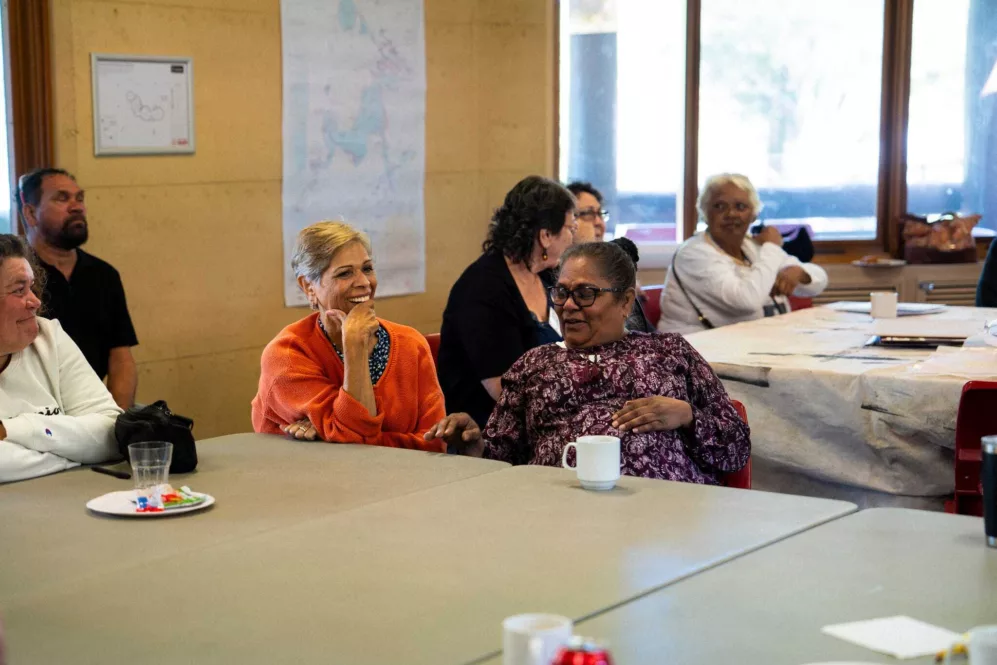 (L–R) Narelle Ogilvie, Clinton Anderson, Geraldine Metcalf and Melba Bodney
Matty Loucas
(L–R) Narelle Ogilvie, Clinton Anderson, Geraldine Metcalf and Melba Bodney
Matty Loucas
Many of the First Nations contributing artists who participated in Place Names Melville’s Cultural Mapping phase remark on the sense of connection and belonging that they’ve experienced during the project.
“I'm absolutely loving it. Connecting with people again, you know? Making connections with friends,” says Robyn Jean Templeton.
Vickie Zani agrees. “I’ve really loved getting to know rellies because most of my life I was over East. Their kids were tiny tackers when I left. And now those tiny tackers have tiny tackers, with tiny tackers. And seeing the same faces, and catching up with them… it’s a really good feeling.”
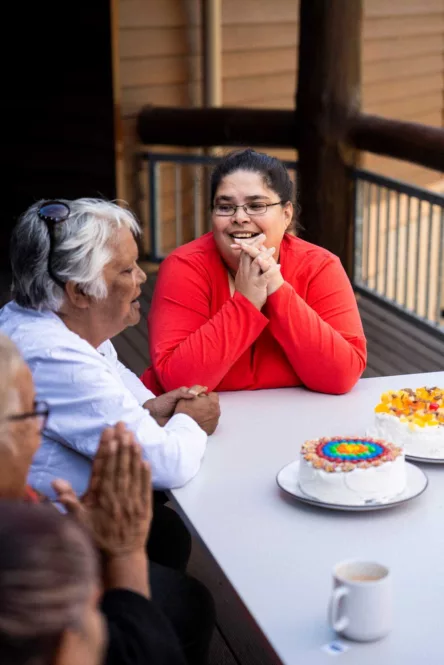 (L–R) Sharon Calgaret and Tova Calgaret
Matty Loucas
(L–R) Sharon Calgaret and Tova Calgaret
Matty Loucas
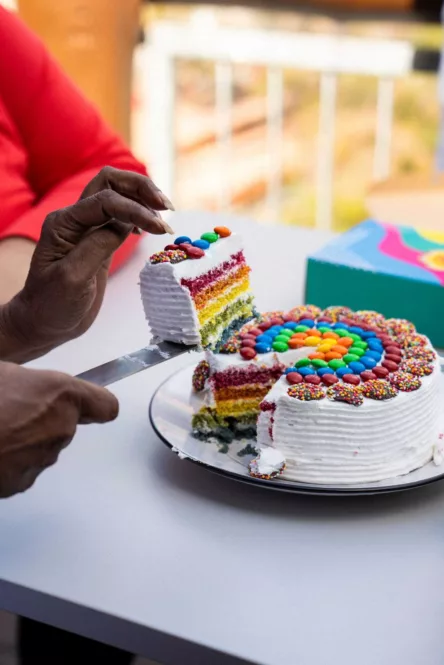 Sharing Tova Calgaret's birthday cake
Matty Loucas
Sharing Tova Calgaret's birthday cake
Matty Loucas
The opportunity to connect in a context that is about celebrating culture is also important, says Karen Morich. “I think it's special to reconnect with all the Aboriginal people that are in the group and a lot of the young ones as well, because we don't generally get together unless it's funerals, or weddings. And there's not so many weddings; it's generally funerals. So it's good to come together when it's a happy occasion.”
Learning about Noongar placenames in this context has been a fascinating experience, says Tova Calgaret, one that has deepened her sense of belonging. “It’s not just where you’re from, it’s who you are,” she says. “Because where you’re from is only part of who you are. It’s also about where you belong and who you connect to.”
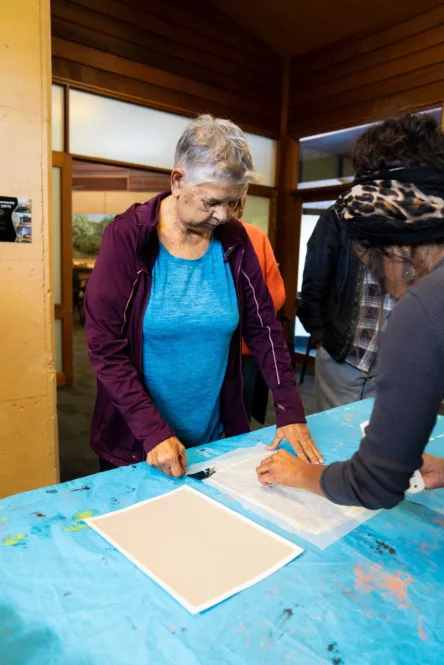 (L–R) Dot Henry and CAN's Creative Producer Natalie Scholtz
Matty Loucas
(L–R) Dot Henry and CAN's Creative Producer Natalie Scholtz
Matty Loucas
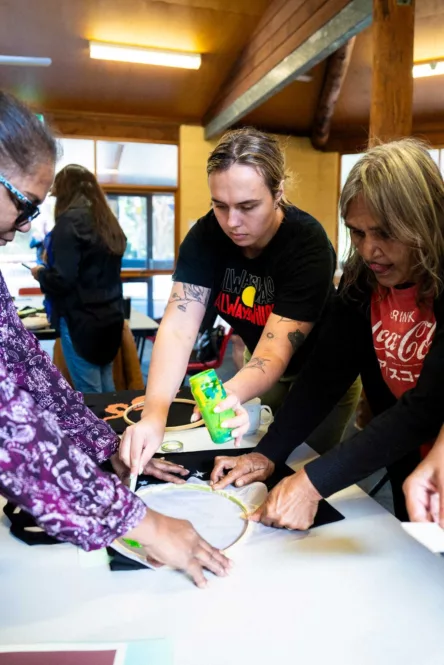 Commmunity artist Zali Morgan assisting Melba Bodney (left) and Marlene Warrell (right)
Matty Loucas
Commmunity artist Zali Morgan assisting Melba Bodney (left) and Marlene Warrell (right)
Matty Loucas
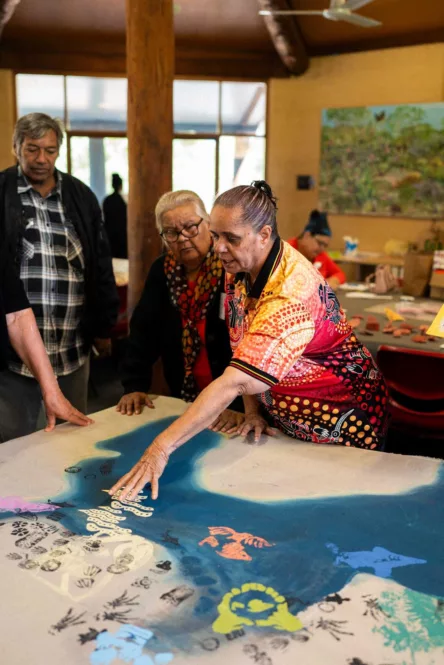 (L–R) Trevor Walley, Dorothy Winmar and Geri Hayden
Matty Loucas
(L–R) Trevor Walley, Dorothy Winmar and Geri Hayden
Matty Loucas
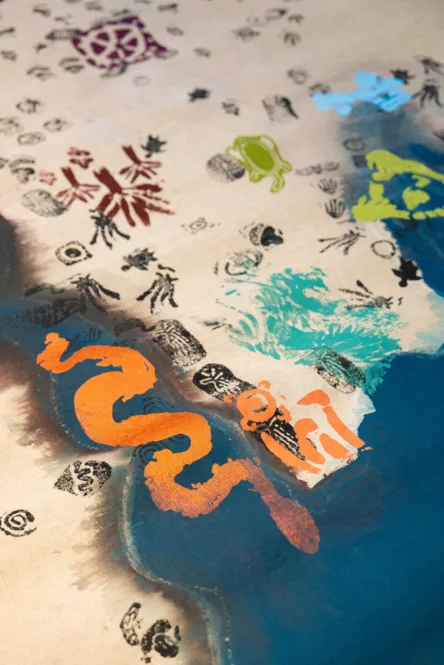 Place Names Melville cultural map in development
Matty Loucas
Place Names Melville cultural map in development
Matty Loucas
The process of making a collaborative artwork that celebrates the meanings of Noongar placenames requires a lot of group decision-making, an element of the project that many participants identify as being one of the most rewarding.
“We all have a voice,” observes Robyn Jean. “We've gone through some tense moments, but the space gave everyone the opportunity to say their piece and then we worked together to come to a conclusion, to some way of moving forward. And I think that is one of the really special parts of being here. I feel really proud to be a part of it.”
“There’s room to agree to disagree,” adds Vickie. “And we all respect each other’s opinions.”
It’s very empowering, Robyn Jean says. “Probably for a lot of these people, they've never had that chance. Never had their voices heard. And now in a group, supporting each other, they can.”
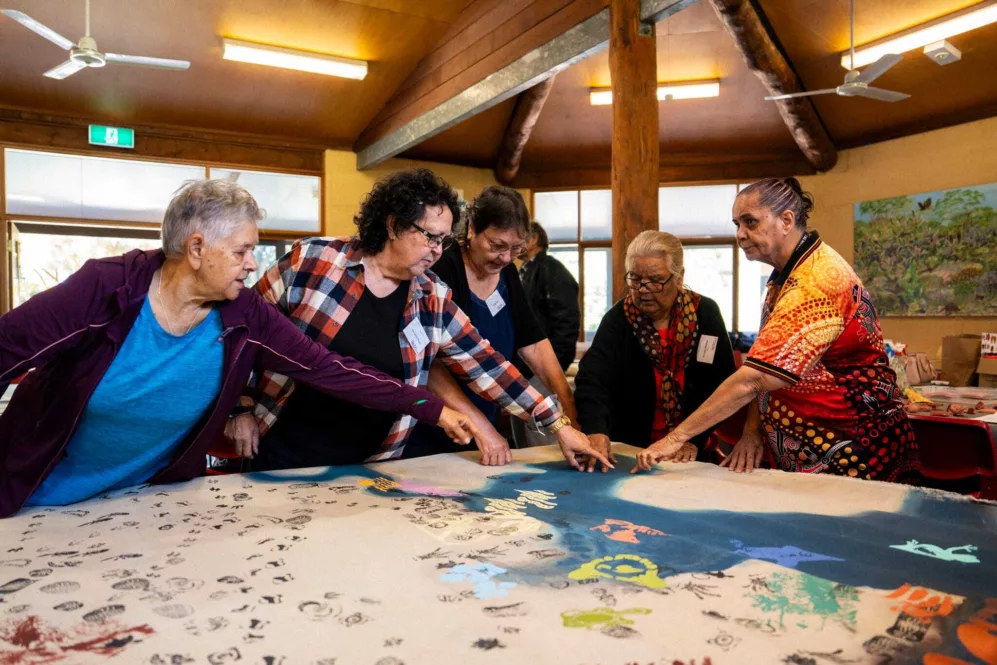 (L–R) Dot Henry, Christine Reich, Vickie Zani, Dorothy Winmar and Geri Hayden
Matty Loucas
(L–R) Dot Henry, Christine Reich, Vickie Zani, Dorothy Winmar and Geri Hayden
Matty Loucas
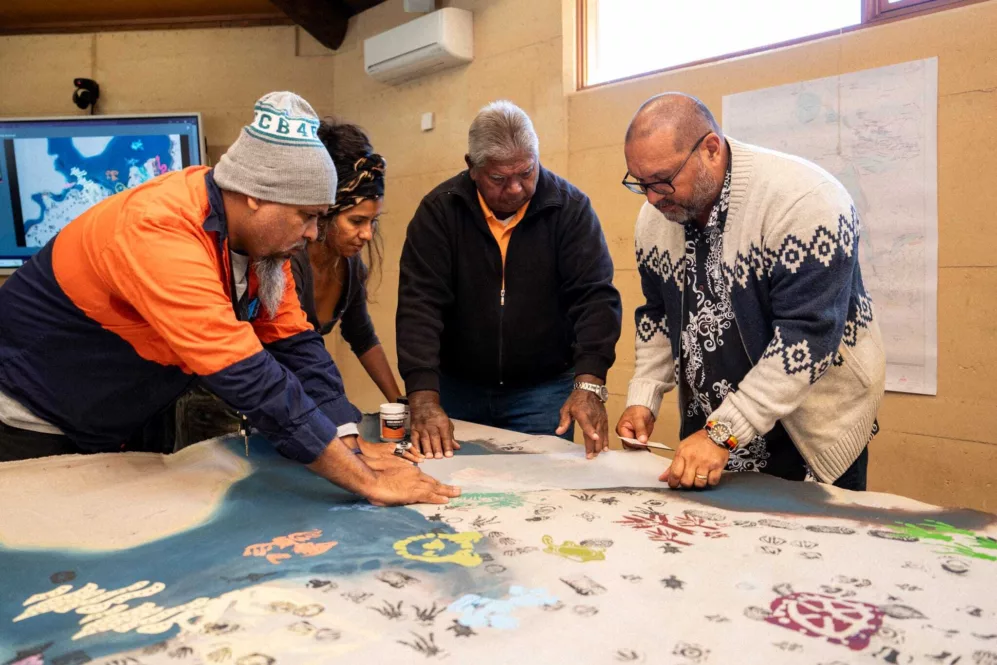 (L–R) Ben Ugle, Natalie Scholtz, John Hart and Terry Morich
Matty Loucas
(L–R) Ben Ugle, Natalie Scholtz, John Hart and Terry Morich
Matty Loucas
Amplifying First Nations voices and First Nations knowledge is central to Place Names, says Whadjuk Noongar Elder, Decoding Advisory Group member and community artist Trevor Walley.
“The First Nations people of this land were very aware of language, song, dance culture, how to live with the land, how to treat the land, how to treat the plants, how to treat the animals with respect. We respect the place because we are part of the place.
“That's what this cultural workshop is about, is showing people the value of our culture. Other places will also learn from our project. And other people will go, ‘Gee, we need the same here, we need to demonstrate to the public that the Aboriginal nation, the First Nations people, need to be listened to.’”
Matty Loucas
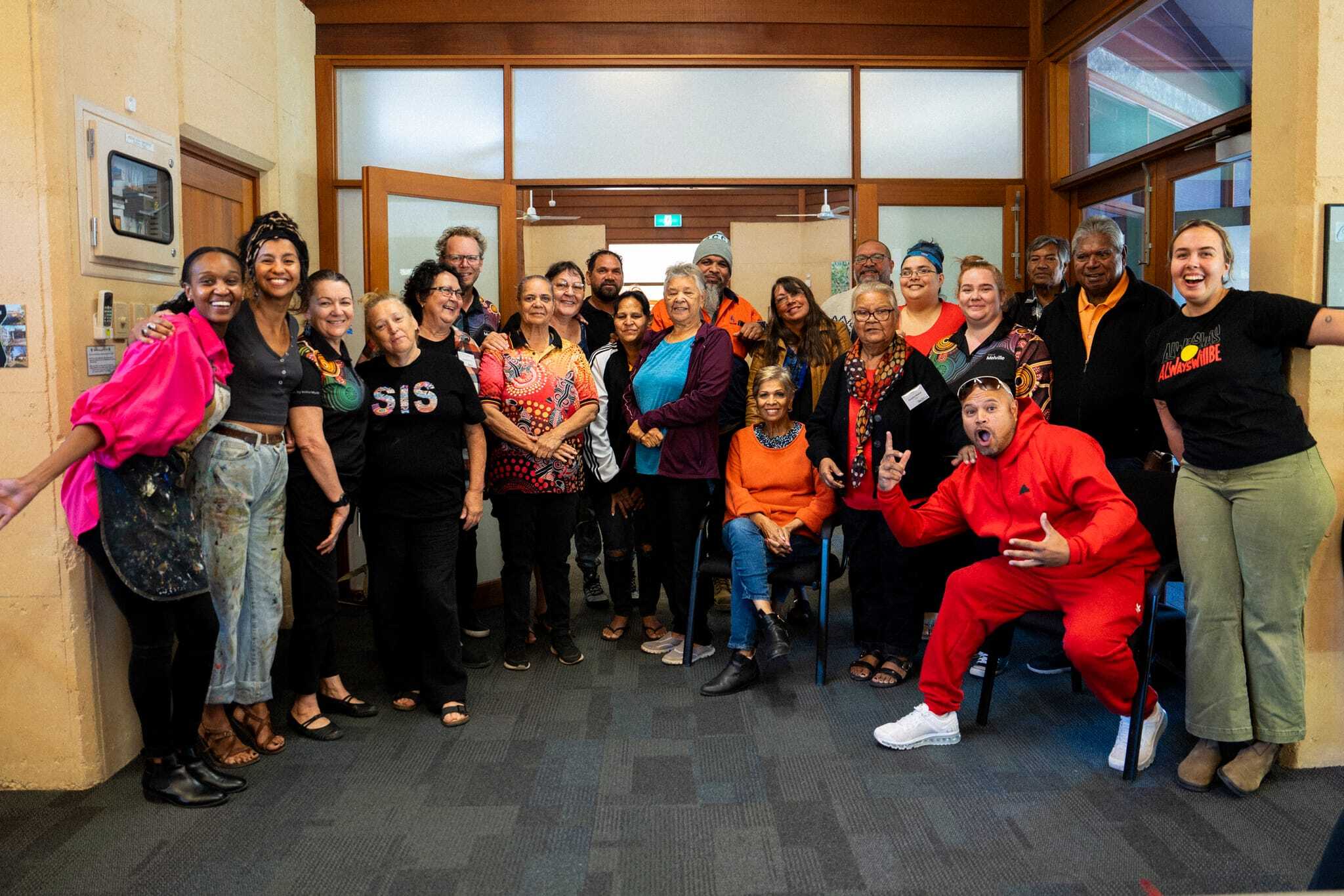
Place Names Melville contributing artists, CAN and City of Melville staff at the final Cultural Mapping workshop
It’s that respect for Country that has impressed itself on Wadjuk/Ballardong/Yued man Ben Ugle, one of the younger community artists contributing to the Cultural Mapping process. “I have a thirst for respect and cultural wisdom, which I teach my kids, nieces and nephews,” he says.
“To my Elders, whom I have been so lucky to be able to get to know over this journey, thank you for your wisdom, your knowledge, your information and your stories, which I will take away from this to make me a better man, a proud Whadjuk, Ballardong, Yued Man.”


Monday – Friday, 9am – 5pm
PO Box 7514 Cloisters Square WA 6850
King Street Arts Centre
Ground Floor
357–365 Murray Street
Perth WA 6000
08 9226 2422
admin@can.org.au
ABN: 72106364407
Copyright 2026 CAN