NEWS
Can artists survive AI?
It feels like conversations about AI are happening on every media platform right now. Tying those conversations together is a ribbon of fear, especially for those of us working in creative industries.
Could AI take over our roles as artists, writers, makers?
While this may seem like a new and terrifying possibility, it isn’t the first time we’ve feared that technology will take over from art.
When photography was first developed, visual artists thought they would be replaced by the camera. But instead the role of the visual artist shifted and expanded, freed from the need to represent reality.
Rather than replacing artists, I think AI will push us to ask, what IS art? What is the purpose of art? Does it exist simply to be consumed?
And anyone who works in the arts sector knows that the arts are much more than consumer products.
As human beings we are driven to create. That’s why craft is such a beautifully constant and universal feature of human cultures. It’s about the things we make and the stories we tell, but it’s also about the process of making art, of developing stories. We don’t create for the sole purpose of consuming. We create because we get something intangible from the process of making, developing, experimenting.
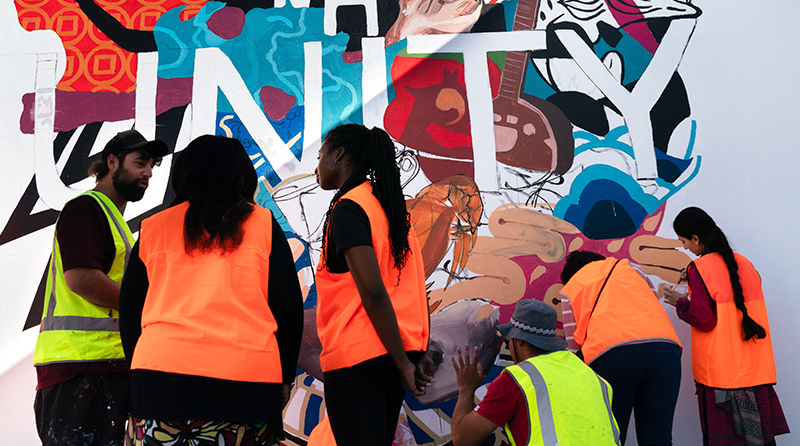
Edwin Sitt
CACD artist Nick Zafir during the Hillview Intercultural Art Project
The idea that AI could replace artists overlooks something crucial about what it means to be human – our inherent need to create. Whatever AI can do in terms of making content, it can’t replace the experience we have of creating art. And it can’t replace the social, health and well-being benefits of being creative.
This is particularly relevant to the Community Arts and Cultural Development sector because CACD is grounded in participation, in the process of making art, and in the benefits that brings to both communities as a whole and individuals.
An initiative like CAN’s Place Names project, for example, is using artistic processes to revive and celebrate Noongar language, and promote intergenerational learning, a shared understanding of cultural identity, and reconciliation.
CACD also benefits the arts sector and art-forms more broadly. At the heart of CACD practice, and of CAN’s vision, is collaboration, between artists and communities. The exchange of ideas, of different ways of looking at the world – which happens not just between artists and communities, but also between artists from different cultural backgrounds – allows art-forms to expand and develop beyond old boundaries.
Then there are the opportunities for mentoring, the career pathways that are developed for emerging diverse artists and arts workers, that ensure that art-forms are expanding culturally as well as aesthetically and thematically.
With humanity embedded in its principles, CACD is an artistic practice that can’t be replaced or replicated by AI.
CACD is the art of the future. And that’s an opportunity for all of us working in this sector.
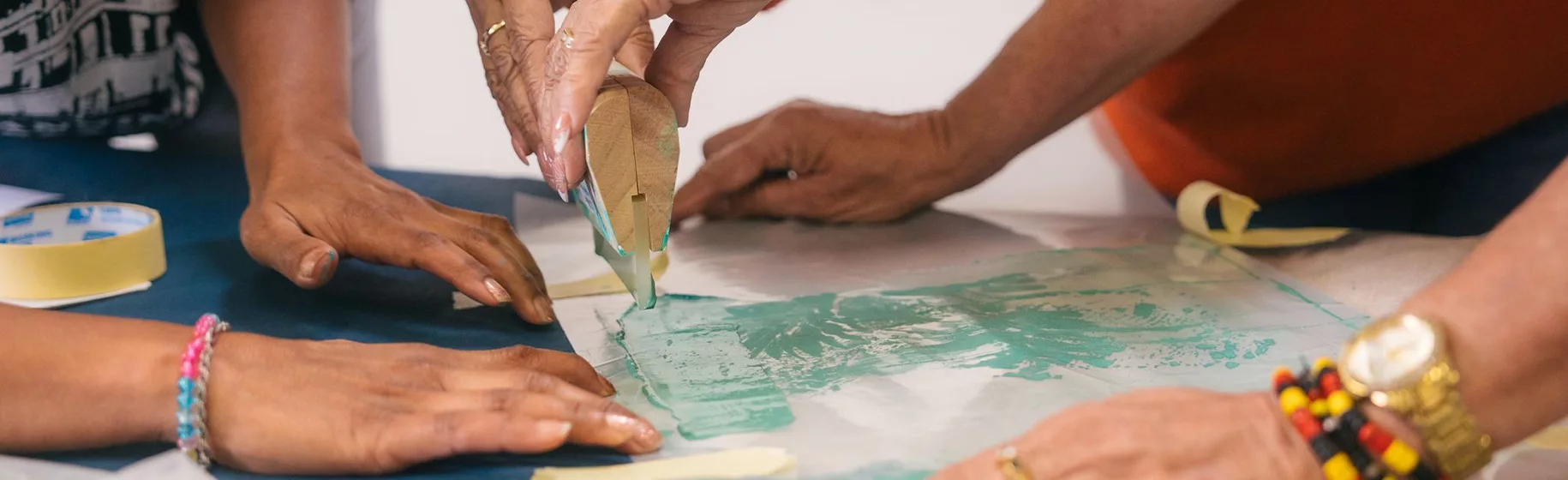
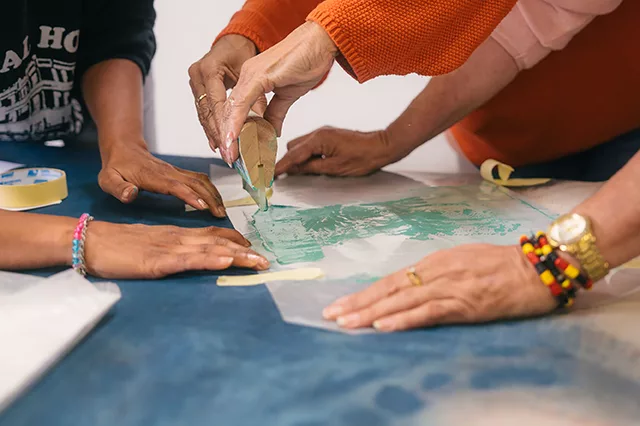
Top: Place Names Melville community-led art making // credit Hugh Sando


Monday – Friday, 9am – 5pm
PO Box 7514 Cloisters Square WA 6850
King Street Arts Centre
Ground Floor
357–365 Murray Street
Perth WA 6000
08 9226 2422
admin@can.org.au
ABN: 72106364407
Copyright 2026 CAN