NEWS
Are we building bridges or burning them down?
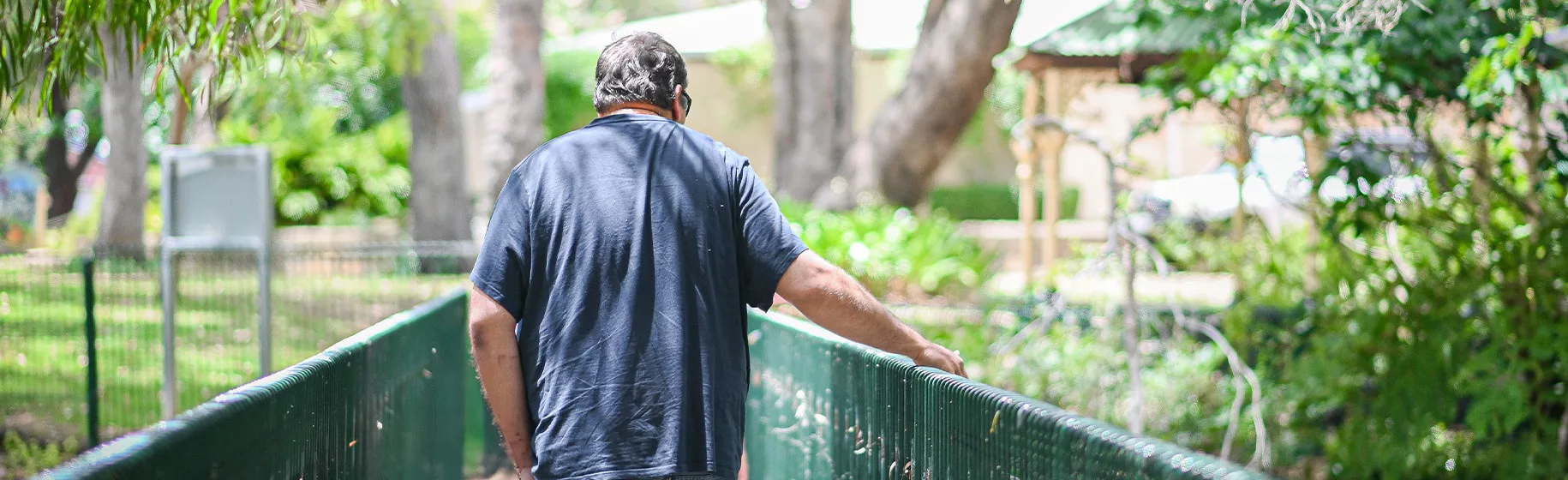
When it comes to reconciliation, Yamatji arts worker, writer and CAN’s Executive Producer Michelle White says it's time for non-indigenous folk to step up to the plate.
As we launch into another National Reconciliation Week, let’s have a look at the theme that’s been picked for 2025 – Bridging Now to Next.
What does this mean?
The national body overseeing the reconciliation agenda says it’s a call to action: At a time when Australia faces uncertainty in its reconciliation journey, this theme calls on all Australians to step forward together.
They’re hopeful words. Step forward together.
But instead of moving closer to reconciliation, in some spaces, it feels like we’re actually drifting further apart.
We tried to step forward with the referendum for a voice to parliament and recognition in the constitution, but Australia said NO
We try to build bridges every time our Elders put aside all the human rights violations they’ve suffered to generously welcome people to their home country. But instead, they’re used as political footballs, picked apart by conservative media and targeted by an increasingly emboldened racist public.
Our warrior dancers proudly share their culture at major sporting events and are subjected to boos, racist catcalls in real life… and outright vileness, hatred and disrespect online.
We could say that the First Nations people of this country have been trying to step forward in unity together since colonisation.
We could say that it’s not us that needs to build any more bridges.
But that would feel like we’re being unfair to the millions of Australians who do take part in National Reconciliation Week, who genuinely want to make a difference. We are thankful and appreciate their allyship.
But if we are to step forward and achieve any sort of systemic change, the real work needs to be done peer-to-peer in the non-indigenous community.
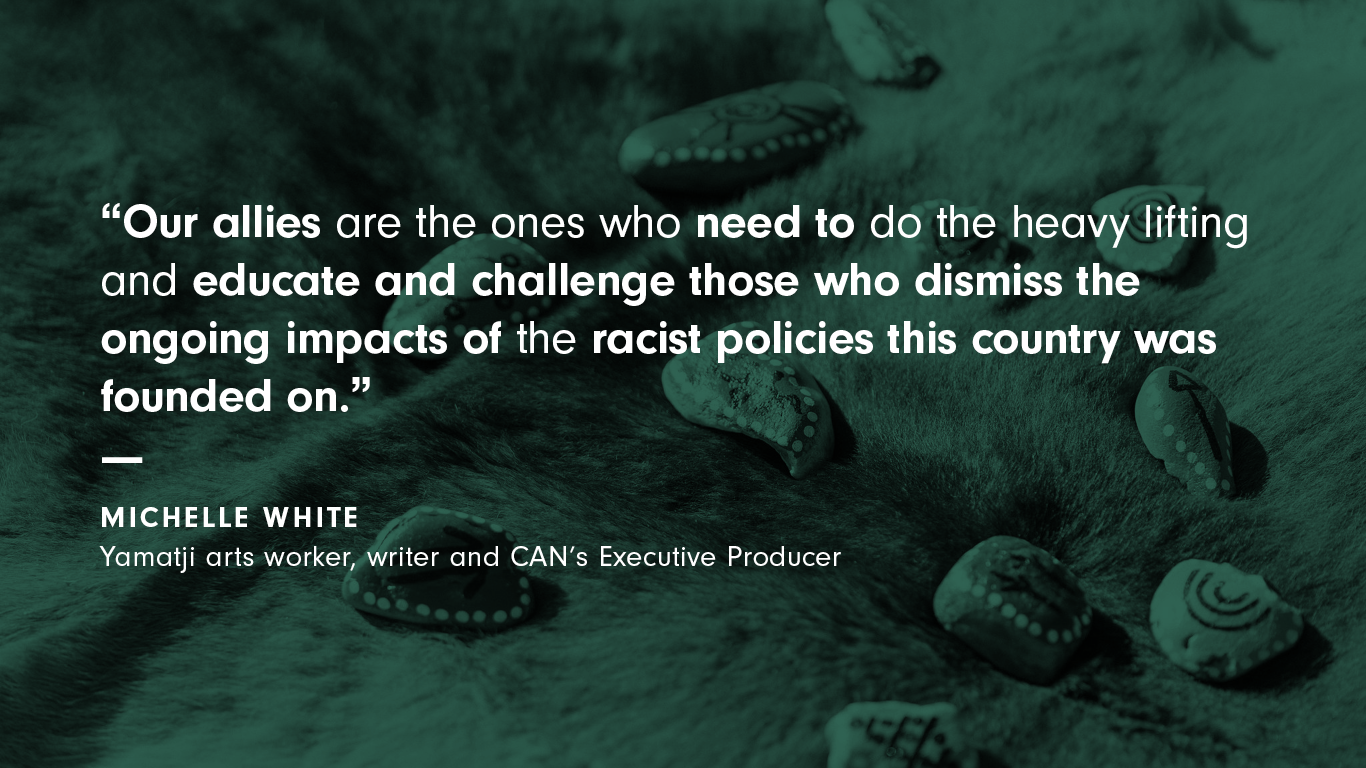
Our allies are the ones who need to do the heavy lifting and educate and challenge those who dismiss the ongoing impacts of the racist policies this country was founded on.
Many First Nations people I know are just too exhausted to keep reliving trauma in the hope of one day stepping forward together.
I recently presented at a First Nations forum as part of a cultural exchange in Japan hosted by DADAA in partnership with CAN. It was an incredible experience.
I shared my personal journey of how I’ve used art and storytelling as a form of truth-telling. I told them about Australia being built on white supremacy, attempted genocide, displacement, slavery and how children were stolen and put into institutions to be assimilated. How hard truths are shared through personal accounts and artistic responses.
Art has always been a way of having difficult conversations and it’s a way I've shared my own story about my mother who was a member of the stolen generation.
My mum was just a child when she was forcibly taken from her mother and put in a children’s home. They told her that her mother didn't want her. She was told to forget her family and focus on training to become a “domestic".
But she knew she was loved. She knew where her family lived and she would constantly break out and run home.
This resulted in multiple altercations with police, a criminal record as long as her arm, and all of her formative years spent in some sort of incarceration.
She bore the scars of that trauma deep. She once told me her greatest achievement was that no one took my sister and me away. Heartbreaking.
The audience in Japan responded to my personal story with a mix of shock – because they were completely unaware of this part of Australia’s history – and genuine compassion. I was overwhelmed by how interested they were and how warmly they embraced me and my story.
I feel the people listening in this foreign country were more open to understanding Australia’s complicated history than many non-indigenous people in my own country.
And for some, they told me it was a chance for them to turn that gaze inwards and reflect on how their own indigenous people are treated and what they could do to move forward.
So, this brings me back to this year’s theme.
While it’s a message full of optimism and hope for a united future, the fact that this was even the theme that had to be picked for this year tells us just how far we still have to go.
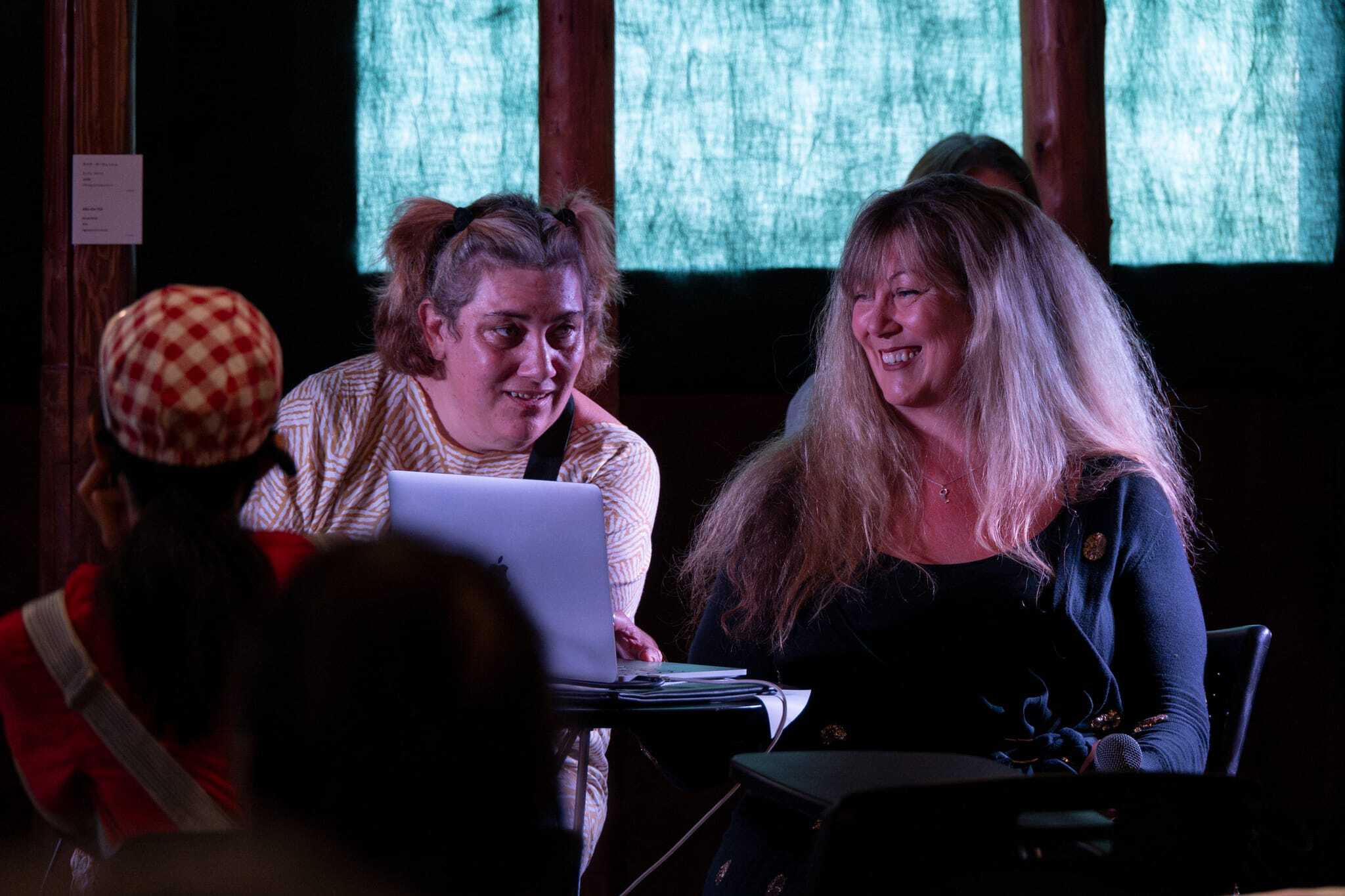
Ai Nakagawa
Michelle White (right) with her sister, artist Mandy White, at the First Nations Forum in Japan
Top photo credit Cassandra Edwards


Monday – Friday, 9am – 5pm
PO Box 7514 Cloisters Square WA 6850
King Street Arts Centre
Ground Floor
357–365 Murray Street
Perth WA 6000
08 9226 2422
admin@can.org.au
ABN: 72106364407
Copyright 2026 CAN